North Carolina insurance licensing
North Carolina Insurance License Requirements and Exam Steps (2026)
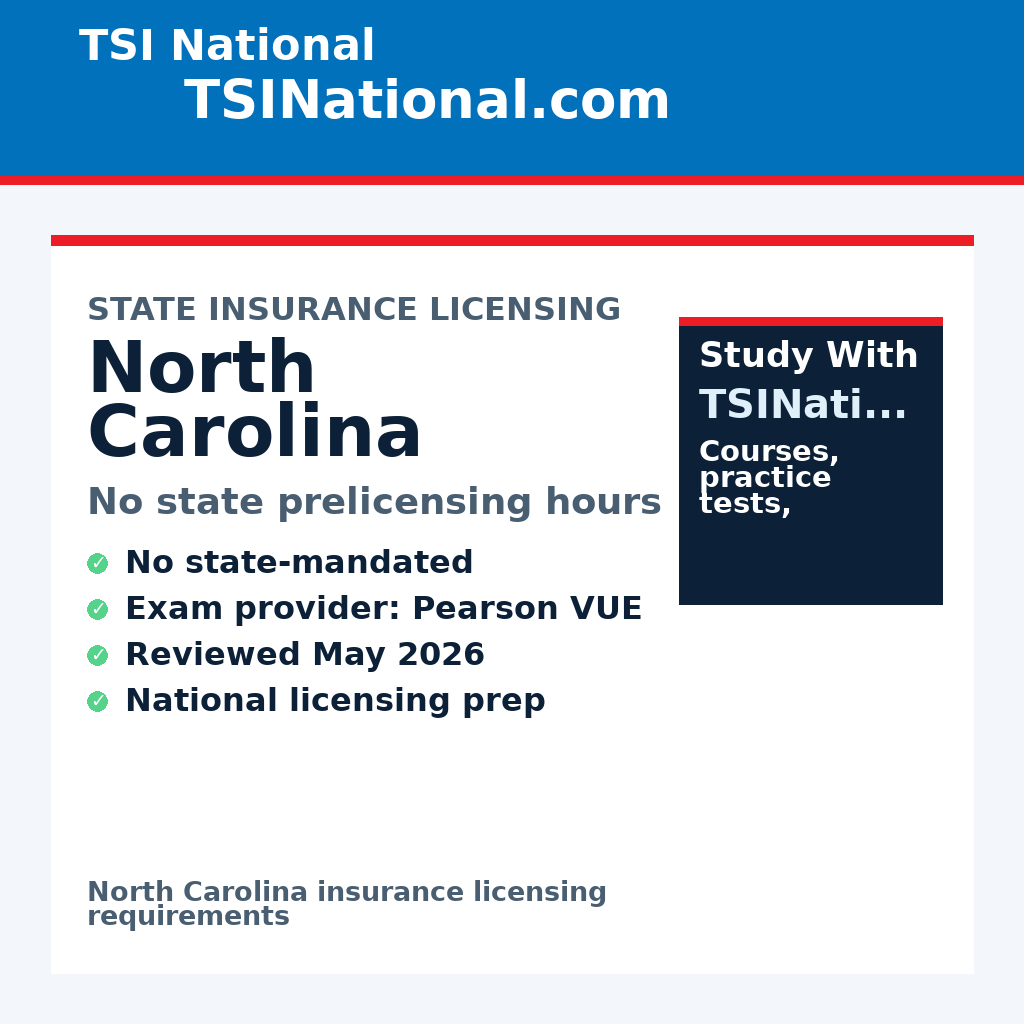
North Carolina changed the producer licensing workflow in 2025. This guide reflects the current state direction: prelicensing education is no longer the mandatory gate for producer applicants, but the state exam still matters.
North Carolina at a glance
Short answers first. Open a detail only when you need the source-backed nuance.
Details
Pearson VUE is the licensing exam vendor for North Carolina insurance examinations.
Details
NCDOI states that S.L. 2025-45 eliminated prelicensing education requirements for insurance producer applicants effective October 1, 2025.
Details
NCDOI directs applicants to the Insurance Licensing Examination Candidate Guide for exam requirements.
Details
NCDOI links resident applicants to the Pearson VUE resident license process and NIPR application path.
Details
NCDOI says to allow 60 days for submitted license applications.
Step-by-step checklist
- Confirm the North Carolina license class and line of authority.
- Read the current Pearson VUE candidate guide for your exam.
- Choose how you will prepare. A prelicensing course can still be useful exam prep, but it is no longer a state pre-exam completion requirement for producer applicants under the 2025 change.
- Schedule and pass the required licensing exam.
- Submit the resident license application through the required process.
- Respond quickly to any NCDOI or NIPR documentation requests.
- Allow the state processing window and wait for license issuance before transacting business.
Common mistakes
- Using old North Carolina hour rules: older articles and provider pages may still mention mandatory 20-hour prelicensing. NCDOI’s 2025 change removed that producer-applicant requirement.
- Skipping exam prep: removing a state course gate does not make the exam easier.
- Assuming instant approval: NCDOI says submitted applications can take 60 days.
Course planning
TSI National can help you prepare for the exam, but NCDOI controls licensing approval. Treat course work as exam preparation and onboarding support rather than a state-required hour filing for producer applicants. You can review available options on the TSI National course results page.
Official sources used
- NCDOI: Rules and prelicensing education repeal alignment
- NCDOI: Become an insurance producer or adjuster
- NCDOI: Pre-licensing education information packet, October 2025
- NIPR: North Carolina resident licensing requirements
This guide is a practical checklist, not legal advice. Always verify current requirements with NCDOI, Pearson VUE, NIPR, and your appointing carrier before applying.